
Bitcoin price in Nigeria: charts, conversions and guides
Bitcoin price charts, USD and naira conversions and plain-language guides for readers in Nigeria. This site prints no price of its own: every price you see comes from a chart widget.
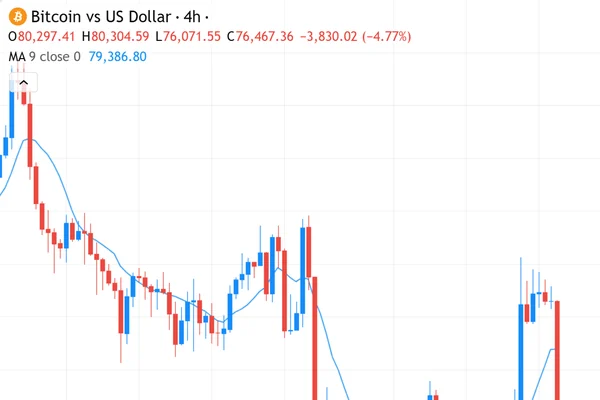
BTC price chart
Chart by the TradingView widget; the data may be delayed, see its page.
The price is drawn here by the TradingView widgetThe price widget did not load
If nothing appears, the exchange shows the same quote on its own page.
Quote at the exchangeBTCUSD on bitstamp.netOpen the widget source on TradingView- Currency
- USD
- Price on this page
- TradingView widget, delayed
This site is a plain-language desk for readers in Nigeria who want to understand bitcoin and its price. It carries price charts in US dollars and in naira, gives each major coin its own page, and explains the basics in ordinary words. Every price shown comes from a TradingView chart widget and may be delayed; this site prints no price of its own.
What you can find here
The site is a small set of pages, each built around a question a reader tends to arrive with. The Bitcoin price in US dollars answers what one bitcoin costs in US dollars, while the Bitcoin to naira chart shows the dollar price and the dollar-to-naira rate side by side, so you can see how the local figure is worked out.
Coin pages sit under the coins section, and each one carries a profile drawn from Wikipedia and Wikidata plus a price chart. They answer the question of what a particular coin is and how it differs from bitcoin. This part of the site grows over time as more profiles are added.
Guides cover the slower questions. Start with what bitcoin is if the basics are still unclear, then move to pages on buying, selling, wallets, addresses, mining and fees as the need comes up. Separate guides deal with price predictions and with CFDs, which follow the price without giving you any coin.
Ask yourself what you want to know before clicking. A price question belongs on the price pages, a coin question on a profile, and a how-does-it-work question in the guides.
How the price of one bitcoin comes about
There is no single official bitcoin price. What you see is the last trade on one marketplace, and other marketplaces are trading at their own last prices at the same moment. The Bitcoin price in US dollars reflects one such feed rather than a ruling by any authority.
Each marketplace works as an order book. Buyers post the prices they are willing to pay, sellers post what they will accept, and a trade happens when the two meet. Orders sit waiting at different levels, so the last trade is simply the most recent match, not a promise about the next one.
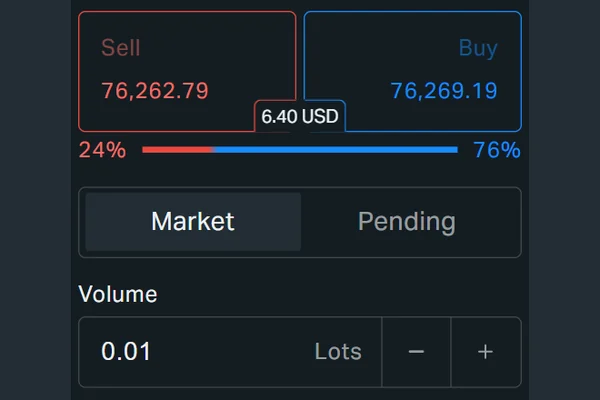
At any moment there is a buy quote and a sell quote, with a gap between them. The gap exists because holders want a little more than buyers offer. A trade usually needs a seller willing to accept the lower bid or a buyer willing to pay the higher ask.
Venues differ by a little because each has its own crowd, its own cash flows and its own speed of matching. A large order on one marketplace can shift its last trade while another venue barely moves. Comparing two feeds and finding slightly different figures is normal, not a fault.
Bitcoin trading does not stop at night, at weekends or on public holidays. A price you read is a moment, not a closing figure, and it can be different by the time your screen refreshes. The chart on this site comes from a TradingView feed that may lag the live market, so treat it as a snapshot with a possible delay.
Why the naira figure is a calculation
The number you see beside bitcoin in naira is not a price quoted by anyone. It is a multiplication of two separate prices: what bitcoin costs in US dollars, and what one dollar costs in naira. The Bitcoin to naira chart sets both charts side by side so you can follow that sum yourself.
Those two prices do not move on the same schedule. Bitcoin trades around the clock, so its dollar figure can shift while you are asleep. The dollar-to-naira rate moves with the local market and with published rates, which update at their own pace. A figure you read in the morning can therefore look different by evening even if only one of the two inputs has moved.
There is also the question of which dollar rate you use. The Central Bank of Nigeria publishes an official rate, and the Bitcoin to naira chart links to its rates page. A bank or a peer-to-peer marketplace may quote something else, because what they offer reflects their own dealings rather than the published figure.
Local quotes can sit away from a plain multiplication for quieter reasons too. Timing is one: a platform may calculate its naira figure from a dollar price captured a few minutes earlier. Venue spread is another: the gap between what buyers offer and sellers accept differs from one marketplace to the next, and that gap feeds into the final number.
This site does the arithmetic for nobody. It shows you the dollar price and the dollar-to-naira rate as two separate feeds, each from a TradingView chart that may be delayed, and leaves the multiplication to you.
Reading a price chart without over-reading it
A chart is a picture of past trades, not a guide to what happens next. Read it as a record of where buyers and sellers met, and it stays useful. Read it as a signal, and you are guessing.
Two axes carry the meaning. The vertical axis shows price, and the horizontal axis shows time. On a line chart, each point joins the last traded price at that moment. A candle chart adds more: each candle covers a set period and shows where price opened, where it closed, and the high and low within that period. The body is the open-to-close range; the thin wicks show the extremes.
Timeframe buttons change the story without changing the market. A short window, such as an hour or a day, magnifies every small move and fills the screen with noise. A long window, such as a month or a year, compresses those same moves and shows the broader shape. A sharp jump on a short window can look like a flat line on a long one.
Hover over the chart, or tap it on a phone, to read the value at a particular moment. That is how you check what the price actually was at a given time rather than estimating from the shape.
Widgets can lag the live market, so the last point on the chart may already be out of date. Before forming any view, switch between two timeframes and compare them. A move that looks dramatic in one often looks ordinary in the other.
Buying and selling from Nigeria: the routes in plain words
There are three common routes for a Nigerian buyer or seller, and they differ in what you end up holding. The first is a crypto exchange, where you open an account and trade against the platform's order book. The second is a peer-to-peer marketplace, where you deal with another person while the platform holds the coins in escrow until both sides confirm. The third is a broker contract that follows the price without giving you any coin at all.
Naira bank transfers are how money moves on the first two routes. On an exchange you fund your account, trade, and withdraw back to your bank. On a peer-to-peer marketplace the buyer pays the seller directly by bank transfer. As a seller, hand over the coins only once the money is visible in your own bank account, never on the strength of a screenshot or a forwarded alert, and never pay or accept payment outside the platform. Keep the transfer receipt until the trade is fully closed.
Platforms often ask for identity checks before they let you move money, so be ready to submit documents. Use your own details only: borrowing or renting someone else's verified account puts your funds at risk.
A quote on any platform is not the chart price. It includes the platform's margin and its fees, and the gap can be wider during busy periods. Compare the quote with the chart before you commit, so you know what the convenience is costing you.
Step-by-step instructions for each route live in the guide to buying bitcoin and the guide to selling bitcoin. Read the one that matches your direction before you move any naira.
Keeping your coins and accounts safe
A wallet holds keys, not coins. The coins sit on the blockchain; what your wallet stores is the private key that proves they are yours to spend. Lose the key without a backup and the coins stay where they are, beyond your reach.
In custodial setup, a platform holds the key for you, so your access depends on their login and their terms. In self-custody, you hold the key yourself, which puts the whole burden of backup on you. The guide to wallets sets out the difference in more detail.
Your recovery phrase is the master key in word form. Write it on paper, keep it offline, and share it with nobody. Do not photograph it, email it, or type it into a website that asks for it.
Before sending coins, copy the receiving address and check the first and last few characters against the source. Malware can swap a copied address for another, and a transfer sent to the wrong address cannot be pulled back.
Scams aimed at Nigerian searchers follow a few shapes. A "free bitcoin" giveaway asks you to send a small amount first. A doubling scheme promises to return twice what you send. Fake support offers to fix your account for a fee. Mining apps ask for a deposit before you earn anything. Real bitcoin is never free: you either buy it at the market price or spend real resources mining it.
Trading the price without owning the coin
A contract for difference lets you take a position on bitcoin's price without holding any coin. You and the broker settle the gap between the price when you open the position and the price when you close it. No wallet, no address, no private key: your account records a number, not a balance of coins.
Leverage is the reason these products need care. It lets you control a position larger than the money you put down, so a small move in the price becomes a large move in your account. Losses grow on the same multiplier as gains, and they can arrive faster than you expect.
Because of that, a broker can close your position once your losses reach the margin you posted. You do not get to wait for a bounce; the position simply ends. Bitcoin's price moves around the clock, so a position can be tested while you sleep.
The sponsored blocks on this site lead to a broker offering crypto contracts for difference. Read the explainer on contracts for difference before you open an account. These products are complex and not suitable for everyone; nothing here is advice to trade them.
How this site is built and what it does not do
Every price on this page comes from a TradingView chart widget, and the figures can lag the live market. Nothing is typed in by hand, so a stale chart is a data delay, not an editorial guess. The Bitcoin to naira chart pairs a Bitcoin chart in USD with a dollar-to-naira chart and links to the Central Bank of Nigeria's rates page.
Coin profiles draw on Wikipedia and Wikidata, and each one records the date its facts were fetched. When those sources change, the page is rebuilt rather than patched, so the profile you read matches the source at that moment.
There is no converter here and no forecast. The site does not tell you what bitcoin will do next, and it publishes no signals. A chart shows what has happened; it cannot show what comes.
The page on our method explains how prices are sourced and how profiles are compiled. If you spot an error, report it and it will be checked against the source. For the risks of trading price moves, see the responsible trading page.
Dollar to naira: chart
Chart by the TradingView widget; the data may be delayed, see its page.
The price is drawn here by the TradingView widgetThe price widget did not load
If nothing appears, the exchange shows the same quote on its own page.
Quote at the exchangeUSDNGN on tradingview.comOpen the widget source on TradingViewGuides
 What is Bitcoin and how does it workBitcoin is a digital currency that exists only as records on a network of computers, and no central bank or…
 How to buy Bitcoin in Nigeria: the steps and the checksBuying bitcoin in Nigeria starts with deciding where the coins will come from, because the route you pick shapes…
 How to sell Bitcoin in Nigeria: the steps and the checksSelling bitcoin in Nigeria is mostly a matter of process. You pick a venue you trust, complete its checks, compare…
 Bitcoin wallets explained: custody, keys and backupsA bitcoin wallet does not hold coins the way a purse holds cash. It holds the keys that let you move coins…
 What a Bitcoin address is and how to use one safelyA bitcoin address is a string of characters that tells the network where to send coins, a bit like an account…
 Bitcoin mining explained: what it is and why it is not free moneyBitcoin mining is the work that records payments on the network and brings new coins into existence. It is not a…
 Why Bitcoin network fees go up and downThe fee you pay to send bitcoin is a bid for space in the next block, so it moves with demand. This page explains…
 Bitcoin price predictions: why nobody can make one reliablyPeople search for bitcoin price predictions hoping for a number they can rely on. Nobody can supply one reliably…
 Trading Bitcoin through CFDs: what it means and what it risksA contract for difference lets you follow the price of bitcoin without owning any coin. This guide explains how…