How to buy Bitcoin in Nigeria: the steps and the checks
Buying bitcoin in Nigeria starts with deciding where the coins will come from, because the route you pick shapes the checks you need to make. This guide walks through the common routes, the questions to ask before sending naira, and the order in which the steps make sense. It names no platform, and every price you see comes from a chart widget whose data may lag.
Three routes, three different things
Purchases generally fit one of three patterns, and they are not interchangeable. One gives you coins in an account, one gives you coins from another person, and one gives you no coins at all. Knowing which you are dealing with prevents most early mistakes.
- Exchange: you buy from the platform or its order book, and the coins sit in your account there. You depend on that company to hold them honestly and to let you withdraw when you ask. The coins are yours in name, but the platform controls the keys until you move them out.
- Peer-to-peer marketplace: you buy from another person, often paying by bank transfer or mobile banking app while the platform holds the coins in escrow. You depend on the escrow working and on the seller releasing promptly once your payment lands. Coins reach your own wallet only after you complete the trade.
- Broker contract for difference: you never own coins, so there is no wallet and nothing to withdraw. You depend on the broker's pricing and on your own margin, and leverage can lose money quickly. Read the CFD guide before treating this as a purchase.
Ask who holds the coins at each stage and what happens if that party fails. For an exchange, that means checking withdrawal terms; for a peer-to-peer trade, that means keeping payment inside the platform's escrow flow rather than sending naira privately. A broker contract leaves you with no coins to hold at all.
Choosing a venue before you send any money
Before any naira leaves your account, spend time reading what the venue publishes about itself. A platform worth using explains its terms in plain language you can finish without a legal dictionary. If the documents are vague about who holds your coins or when you can withdraw them, treat that as a reason to look elsewhere.
Find out who runs the platform and where it is registered. Ownership should be stated openly, not buried. Identity checks are a normal part of opening an account; a serious venue explains up front what documents it asks for and why. The same applies to withdrawals: the process for moving naira back to your bank account should be described step by step, including how long it takes and what could hold it up.
Look for a fee page you can understand at a glance. Charges for deposits, trades and withdrawals should be listed together, in words rather than footnotes. Test the support channel with a simple question before you fund anything; a prompt, clear reply tells you more than any advert. Read reviews with care, and prefer detailed accounts of real experience over identical praise repeated across sites.
Warning signs deserve equal attention. Promised returns, pressure to send money quickly, vague statements about who owns the platform, and a contact route that exists only on a chat app are all reasons to pause. A venue that cannot answer a plain question in writing before you pay is unlikely to improve afterwards.
Account, identity checks and why they are normal
Opening an account usually takes an email address and a phone number, and the platform sends a code by SMS or email to confirm both belong to you. Use details you control and can still reach months later, because a lost phone number can lock you out of your own account. Set a strong password and a PIN that differs from your bank card.
Many platforms ask for identity checks. Expect to be asked to upload a photo of an official ID document and to complete a face check through your phone camera. These steps exist to match a real person to the account and to keep the platform within the rules it operates under, so treat them as ordinary paperwork rather than an obstacle.
Verification often fails for small reasons. A blurred or cropped photo, glare on the document, or a name that does not match the bank account you will pay from are the usual culprits. Check spelling against your bank records before you submit, and retake the picture in good light.
Guard your login details and any verification code as you would your bank PIN. A caller or message claiming to be support and asking for a code is a scam, whichever name it uses; genuine staff do not need it. Share nothing, and contact the platform through its own app or site instead.
Secure the account before you fund it
Treat the login as the lock on everything you are about to send. Reuse a password from another site and one leak elsewhere can open this account too, so build a fresh one of decent length and keep it in a password manager rather than your head.
Turn on two-step login and prefer an authenticator app over SMS where the platform offers both. A code read from your own screen is harder to intercept than a text message, which can be diverted if your line is compromised. Store the backup codes the setup gives you somewhere offline.
Set an anti-phishing code if the venue provides one, and glance at the address bar before typing anything. A separate email address used only for this account narrows the damage if your main inbox is breached. Log in over your own mobile data rather than public wifi in a cafe or terminal.
Look for a withdrawal address allow-list and switch it on, so coins can only leave to a wallet you have already saved. If your phone is lost, act through the platform's own site from another device, change the password and reset two-step login, then ask support to review recent activity.
Paying in naira: bank transfer, cards and payment apps
Money reaches a Bitcoin purchase in Nigeria by a handful of routes, and each one leaves a different trail. On a platform that sells coins directly, you send naira by bank transfer from an account in your own name, or pay with a card or a mobile banking app where those options are offered. Availability varies by venue and by the day, so read the platform's own payment page rather than assuming a method will work.
Cards and payment apps can cost more than a plain transfer, because the provider adds its own charge on top. They may also be declined, often for reasons that have nothing to do with Bitcoin: a card limit, a bank block on foreign merchants, or a verification step you have not completed. Keep a bank transfer as your fallback and check the total you will actually part with before confirming.
Peer-to-peer trades follow stricter rules. Pay only through the exact method shown on the order, to the account name displayed there, and keep the order open in the platform while you do it. Send the money first, then mark the order as paid; marking early gives the seller nothing to verify and weakens your position if something goes wrong.
Moving the conversation off the platform is a common way losses begin. A seller who rushes you, asks for payment to a different account, or wants the trade settled by chat is a reason to cancel, not to hurry. Compare the amount you are quoted with the naira price shown on our charts before you commit.
Check the quote against the chart
The figure a platform shows you is not the market price. It bundles the spread, which is the platform's own margin between what it pays and what it charges you, together with any fee it adds on top. Two venues can quote the same coin minutes apart and hand you noticeably different amounts of it for the same naira.
Work out the implied dollar price before you confirm anything. If the platform quotes a coin at a naira figure, divide it by the dollar rate you believe applies and compare the result with the dollar price on our chart page. A quote that sits close to that chart is ordinary; one that drifts far above it is your signal to slow down and ask what is included.
Naira quotes are built from two inputs: the dollar price of Bitcoin and the dollar-to-naira rate. Those two charts refresh on different schedules, so a small gap between what you see and what a platform shows is normal. A large gap usually means margin, a stale rate, or a venue pricing loosely, and it is worth pricing elsewhere before you send money.
Finally, look at the coins you actually receive once every charge is deducted, not just the headline rate. A quote that looks generous on the surface can shrink once the spread and withdrawal costs are counted. Compare the naira figure with the naira value on our price page, then judge the deal on the final amount.
Placing the first order
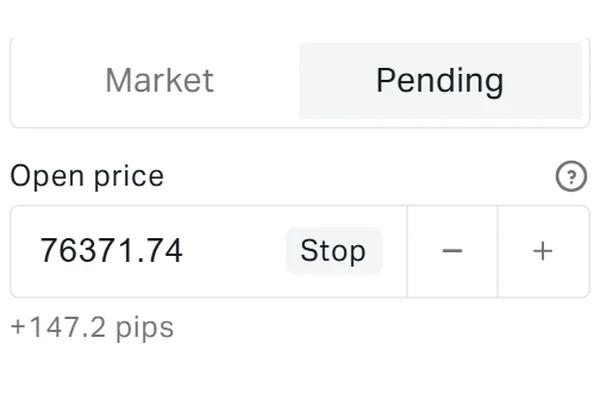
A market order buys at whatever price the venue can get right now, so you know it will fill but not the exact figure until it does. A limit order works differently: you set the most you are willing to pay, and the trade waits until the market reaches that level. If the price never gets there, nothing happens and your naira stays put.
Start small for your first order. A modest amount lets you watch the whole cycle — confirmation, debit, coins arriving — without exposing much if you misread a screen. You can buy a fraction of a coin, so there is no need to purchase a whole one.
Read the confirmation screen before you approve anything. It should show how much bitcoin you are getting, the fee charged, and the total in naira leaving your account. If any of those figures is missing or looks wrong, stop and go back.
An order marked pending is still being processed; completed means it has finished. If one hangs, wait a while, then check the order status page in your account. Raise it through the platform's official support channel — never with a stranger on social media who offers to chase it for you.
After the purchase: wallet, records and scams
Coins bought on a platform sit in an account the venue controls, not in your pocket. Moving them to a wallet you hold yourself puts the keys in your hands, but it also means no support desk can reverse a mistake. The choice is yours to make, and it is worth making deliberately rather than by default.
Before sending a large amount to your own wallet, send a small test transfer and confirm it arrives. Check the receiving address carefully character by character, because a payment sent to the wrong address cannot be recalled. Once the test lands, move the rest in the same way.
Keep your own record of each purchase: the date, the amount in naira, the amount of bitcoin received, and the platform used. Screenshot the confirmation screen and keep it with your bank statement. These records make it far easier to answer questions later, whether from your bank or from your own accounts.
New buyers attract particular scams. A doubling scheme promises to send back twice what you transfer, and simply keeps your coins. Fake support asks you to share your screen or read out a code, which hands over your account. So-called recovery agents offer to retrieve lost funds for an upfront fee and then vanish.
If something goes wrong, stop sending money at once. Keep every screenshot and message, report the matter to your bank and to the platform through its official channel, and change your passwords.
More guides
 How to sell Bitcoin in Nigeria: the steps and the checksSelling bitcoin in Nigeria is mostly a matter of process. You pick a venue you trust, complete its checks, compare…
 Bitcoin wallets explained: custody, keys and backupsA bitcoin wallet does not hold coins the way a purse holds cash. It holds the keys that let you move coins…
 What a Bitcoin address is and how to use one safelyA bitcoin address is a string of characters that tells the network where to send coins, a bit like an account…
Read next: How to sell Bitcoin in Nigeria: the steps and the checks · Coins and charts · Prices