BTCBitcoin
In the crypto market, the instrument known by the code BTC is not a company and not a listed share, but a digital asset. Bitcoin is the first decentralized cryptocurrency, built on a free-market ideology. According to public records, it was invented when an unknown person published a white paper under the pseudonym Satoshi Nakamoto.
BTC price chart
Chart by the TradingView widget; the data may be delayed, see its page.
The price is drawn here by the TradingView widgetThe price widget did not load
If nothing appears, the exchange shows the same quote on its own page.
Quote at the exchangeBTCUSD on bitstamp.netOpen the widget source on TradingView- Currency
- USD
- Price on this page
- TradingView widget, delayed
The price comes from the TradingView widget and may lag the market; it is not a price from this site.
The project in a few lines
Bitcoin was set out in a white paper by a person or group writing under the name Satoshi Nakamoto. Nobody has established who that was, and the identity remains unknown. The paper described a way to send value between strangers without a bank in the middle.
The project dates to 2009, when the network began producing its first blocks. There is no company behind it, no headquarters and no owner. What exists is open software and a group of participants who choose to run it.
Computers spread across the world keep the network going. Each one holds a copy of the transaction record and checks new entries against the same rules. No single machine or office decides what counts as valid.
On price charts the code BTC is simply the ticker for bitcoin, the label a market uses when quoting it against another currency such as USD or NGN. The ticker tells you which asset is being priced, not who issues it. For a plain explanation of the asset itself, see what bitcoin is.
A fixed supply by design
Bitcoin was written with a ceiling: the total supply is capped at twenty-one million coins. New coins enter circulation only as rewards paid to the computers that add blocks to the record, and that reward is cut on a schedule set in the software. Once the last coin is issued, no more can be created.
The cap is a rule of the protocol, not a promise from an institution. Every computer running the software checks the same limit, so a change would require widespread agreement among participants rather than a decision by one office. That is why the ceiling is described as part of the design rather than a policy.
Each coin divides into much smaller units, so a buyer does not need a whole coin. Fractions can be sent and received like any other amount, which matters when the naira price of one coin is high.
A fixed supply says nothing about price. Scarcity does not stop the market price from moving sharply in either direction, and it offers no protection against loss.
Blocks, miners and the record
Transactions are grouped into blocks, and a new block is added about every ten minutes. The work of adding them is done by miners, who run software that competes to solve a cryptographic puzzle. This is proof of work: a costly calculation that makes tampering with past blocks impractical.
Miners are paid in two ways. The protocol issues new coins to whoever adds a valid block, and senders attach fees that go to the miner as well. The reward is how new bitcoin enters circulation, and it is cut on a schedule written into the software.
Every block is linked to the one before it, forming a shared record that anyone can read. You do not need an account or permission to inspect it; a block explorer shows the transactions inside each block. Copies of this record sit on computers around the world, and each one checks new blocks against the same rules.
Mining is competitive and uses real electricity, so it is not a casual activity. Our guide to how mining works covers the machinery and the costs, and warns about “free bitcoin” mining traps that ask you to pay before you earn.
Reading the BTC chart on this page
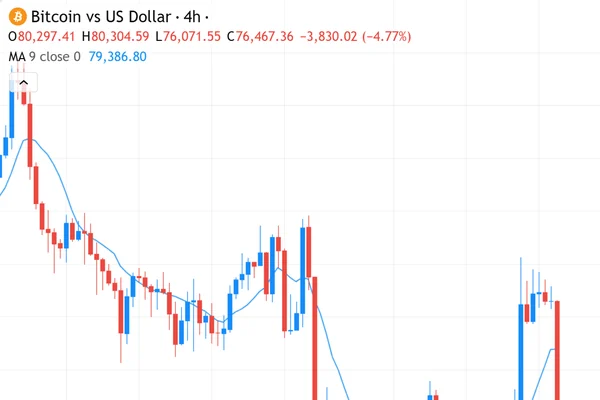
The price panel on this page is a TradingView chart, embedded to show bitcoin against the US dollar. It is a window onto data supplied by that service, not a quote from this site. We publish no figure of our own anywhere on the page.
Buttons along the chart switch the timeframe, from minutes up to weeks and beyond. Hovering over the line brings up the price at that moment, which helps when you want to see what happened at a particular point. Treat any reading as a snapshot: the widget can lag the live market, so the number you see may already be out of date.
One useful habit is to compare two timeframes. A short one shows the recent chop; a longer one shows the wider move the short view sits inside. Neither tells you what comes next.
The chart is quoted in USD. For the value in naira you need the second chart on the bitcoin price in naira page, which pairs the dollar price with the dollar rate. The dollar figure itself is on the BTC price in USD page.
Keeping bitcoin, or only tracking its price
Owning bitcoin means holding it in a wallet, which is software or hardware that stores the keys controlling an address. You can receive coins at that address and send them out again, and the balance is yours to keep or move. Our guide to bitcoin wallets explains the difference between a wallet you control and one run by a service.
To buy, people use a platform: a peer-to-peer marketplace where you pay a seller by bank transfer, or an exchange that holds the coins for you. Keep every peer-to-peer payment inside the platform's order. Check who holds the keys before you commit funds, because a balance on someone else’s books depends on that business staying open.
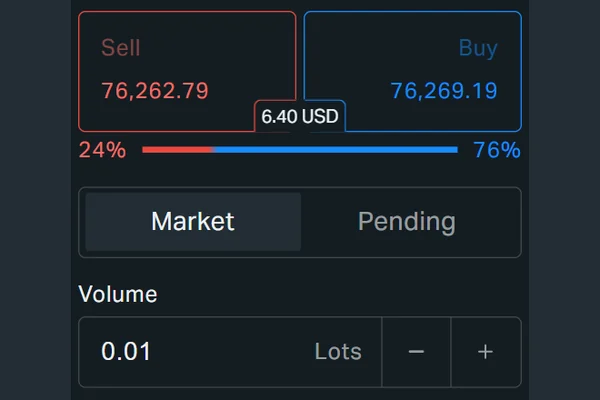
A different route is a contract that follows the price without any coin changing hands. Our page on bitcoin CFDs sets out how these work: no wallet is involved, and leverage means losses can mount quickly. The sponsored block on this page points to a broker offering crypto CFDs, and that is an advertisement, not a recommendation.
Holding and following the price are separate activities with separate risks. Neither is advice to buy or sell.
Bitcoin and look-alike coins
BCH is a separate coin that began as a fork of bitcoin. It carries part of the same name, but it is not bitcoin: treat the two as different assets with different addresses, because coins sent to the wrong one may not arrive.
Always check the full name and the ticker before you send or receive. Read the BCH profile to see how the fork is described, then compare it with the other entries in our coin list.
One coin's price tells you nothing certain about another's, even when the names look alike.
Bitcoin: basics
- Market
- Crypto market · BTC
- Founded
- 2009Wikidata
Coin profile from Wikipedia and Wikidata (fetched 05.11.2026); it may lag behind recent changes.
More guides
 What is Bitcoin and how does it workBitcoin is a digital currency that exists only as records on a network of computers, and no central bank or…
 How to buy Bitcoin in Nigeria: the steps and the checksBuying bitcoin in Nigeria starts with deciding where the coins will come from, because the route you pick shapes…
 How to sell Bitcoin in Nigeria: the steps and the checksSelling bitcoin in Nigeria is mostly a matter of process. You pick a venue you trust, complete its checks, compare…
Read next: Bitcoin Cash (BCH): chart and basics · Coins and charts · Prices