What is Bitcoin and how does it work
Bitcoin is a digital currency that exists only as records on a network of computers, and no central bank or company issues it. This guide explains what it is, how the network works, what gives it value to people, and what it is not, in plain terms for anyone in Nigeria trying to make sense of it.
The idea: money without a central issuer
The idea behind Bitcoin is simple to state: a digital payment that settles between two people without a bank sitting in the middle. Normally, when you send money through a mobile banking app or a local bank transfer, an institution checks the balance, approves the move and keeps the record. Bitcoin was designed to do that checking and recording across many computers instead, so no single institution stands between sender and receiver.
The design was set out in a white paper published in 2008 under the pseudonym Satoshi Nakamoto. The network itself dates to 2009, when the first blocks were produced. Nobody knows who Satoshi Nakamoto is; the name has never been tied to a confirmed person or group.
That anonymity is part of why the question of ownership comes up. No company, government or founder runs Bitcoin. The rules live in software that anyone can inspect, and the computers that follow those rules keep the system moving. Changes only take effect when the wider network accepts them, which is why no single party can rewrite the rules alone.
For an ordinary user in Nigeria, the practical point is this: holding bitcoin does not mean holding an account with an institution that can freeze it or correct it. It means holding a key that proves control of coins on the network. That control cuts both ways, because a lost key means lost coins and there is no help desk to call.
A shared ledger instead of a bank's books
A bank keeps your balance in its own books, and you see only the entries it chooses to show you. Bitcoin replaces that private book with a shared record that computers all over the world hold copies of. Each copy is checked against the others, so a payment written into one copy has to match everywhere else.
Think of a notebook that everybody can read and nobody can erase. When someone pays, a new line is added: this amount moves from one bitcoin address to another. The line is grouped with other recent lines into a block, which then joins the chain of earlier blocks. That chain is why the record is called a blockchain.
The copying is what makes quiet edits hard. To rewrite one old line, someone would have to redo the work behind every block added after it, on most of the network at once, while the honest copies keep growing. In practice the effort needed far outweighs any gain, so the record stands.
Here is one payment, step by step:
- You open your wallet and enter the receiver's address and the amount.
- You approve the payment with your PIN or another check set on the wallet.
- The wallet signs the transaction with your private key, proving the coins are yours to move.
- The signed transaction is broadcast to nearby computers, which pass it on.
- It waits in a pool of pending transactions until a computer picks it up and adds it to a block.
A confirmation means a block containing your transaction has been added to the chain. Waiting for more blocks makes a reversal harder still, which is why receivers often wait before treating a payment as settled.
Coins, units and the fixed supply
The word Bitcoin covers two things that are easy to mix up: the network and the unit. The network is the system of computers that checks and records payments; the unit is what those records count. When someone says they hold bitcoin, they mean a balance recorded on that network, not a file sitting in a folder on their phone.
Each coin can be split into very small parts, so owning a fraction is normal. The wallet shows a balance, and behind it sits a private key that proves the balance is yours to move. Nothing physical changes hands; the record is updated and copied across the network.
The supply cap
The design fixes the total at twenty-one million coins. That figure is written into the software rules the network follows, and the rules release new coins on a set schedule rather than on demand. The cap is part of the design because scarcity is built in: nobody can decide one morning to issue more and dilute what everyone else holds.
Bitcoin Cash, a fork of bitcoin launched in 2017, follows the same pattern, with proof of work and a maximum supply of twenty-one million coins. Both networks add a block about every ten minutes, and both count balances in records rather than in files you carry.
Where new coins come from
New coins enter circulation through mining. Computers on the network, called miners, gather pending payments into a block and race to solve a mathematical puzzle tied to that block. The first to solve it announces the block, other computers verify the work, and the block is added to the chain. In return, the miner is paid newly created coins plus the fees attached to the payments inside the block.
The puzzle is what proof of work means in plain terms: a miner must spend real computing effort to produce an answer that anyone can check in an instant. Guessing is the only route to the answer, so the work cannot be faked, and a block that fails the check is rejected by the network. Because a block is added about every ten minutes, new coins arrive on a steady schedule rather than whenever someone wants more.
This is also how the network stays honest. Rewriting an old block would mean redoing the puzzle work for it and every block after it, faster than the rest of the network adds new ones. The cost of that effort is what keeps miners building on the existing chain instead of trying to replace it.
For the full detail, see our guide to how bitcoin mining works. Treat offers of free bitcoin from mining sites with suspicion; they often hide a catch.
What gives bitcoin value to people
Bitcoin has no board, no head office and no product to sell, so its value rests on agreement. People accept it because they expect others to accept it later, and because the network does something they find useful. That agreement shifts with news, sentiment and demand, which is why the price moves.
Scarcity is built into the software. The supply cap of twenty-one million coins is a rule the network enforces, not a promise from anyone, and new coins arrive on a fixed schedule. When demand grows against a supply that cannot be expanded at will, the price tends to react. Nothing about that makes the value permanent.
Usefulness matters too. Coins can be sent to someone in another country without routing through a bank, and settlement happens on the shared record rather than inside an institution's books. Anyone can inspect that record and confirm that a payment exists. For a trader or a family sending money across a border, that openness is part of the appeal.
The other side deserves equal weight. No institution stands behind bitcoin, so nobody is obliged to buy it from you at any price. The bitcoin price in US dollars is simply what a buyer and seller agreed at that moment, and it can drop sharply within hours. Money you may need soon does not belong in something that behaves this way.
What bitcoin is not
Bitcoin is not a company, and holding it does not make you a shareholder. There is no board to answer to, no dividend, and no management team working on your behalf. What you own is a balance on a shared record, and its worth depends on what another buyer will pay.
It is not a bank account either. A deposit sits with an institution that owes you repayment; bitcoin sits with you, and nobody is on the hook to return it. Lose your private key and the balance stays on the record, unmoved and beyond your reach.
Offers of free bitcoin, doubling schemes and mining apps that promise daily payouts are traps. They usually ask for a deposit or a key first, then vanish. Treat any request for your PIN, OTP or recovery phrase as a theft attempt, whatever the story attached to it.
Pseudonymous is not the same as anonymous. Every payment is written to a public record that anyone can inspect, and enough linking can tie an address to a person. Do not count on hiding, and do not treat the record as private.
Nor can a payment be reversed. Once a transaction is confirmed, no bank call or support ticket undoes it; the only route back is the receiver sending the coins again. Send to the wrong address and they are gone. Check every address before you send.
Price swings and why this site shows charts
A bitcoin price is not a fixed number that someone can quote to you and leave it at that. It is the last agreed trade on whichever venue the chart is reading, and it changes minute by minute, including while Nigeria sleeps. A figure from a friend, a group chat or a screenshot may be hours old before it reaches you.
Read a chart across more than one timeframe before forming a view. The hourly view shows the noise; the daily and weekly views show the trend the noise sits inside. Steep vertical moves on a short timeframe often look dramatic but shrink once you zoom out.
This site does not publish its own prices. Every figure you see comes from an embedded TradingView chart, whose feed can lag the live market, so treat the display as a guide rather than a dealing price. The dollar page explains how to read the US dollar chart, and the naira page pairs a dollar chart with the US dollar against the naira so you can see both legs of the conversion.
Charts describe what already happened; they do not indicate what comes next. Nobody can tell you where the price goes, and anyone who claims otherwise is guessing.
Using bitcoin from Nigeria
There are three common ways to reach bitcoin: an exchange account, a peer-to-peer marketplace, or a wallet on your phone. Each route has its own trade-offs in speed, cost and how much you have to trust a counterparty. A naira bank transfer is a common way money goes in or out, whether you are paying a seller or cashing out.
Before you send anything, read the current notices published by the Central Bank of Nigeria and other official bodies. Rules around crypto can shift, and older guidance you find in a group chat may no longer reflect the position. Keeping your own records of each transaction is sensible, both for your own tracking and for any question that arises later.
Start with a small amount you can afford to lose while you learn how the process works. Confirm the recipient details before you transfer, and be wary of anyone who pressures you to move quickly. Our guide on how to buy bitcoin in Nigeria walks through the steps, and the explainer on bitcoin wallets covers where the coins actually sit once you own them.
Treat any message asking for your PIN, OTP or recovery phrase as an attempt to steal from you, no matter who appears to have sent it.
More guides
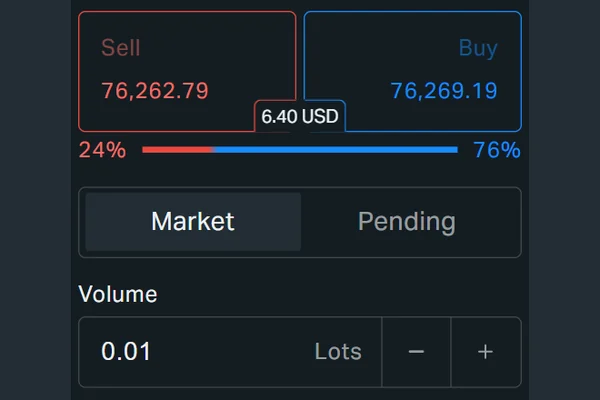 How to buy Bitcoin in Nigeria: the steps and the checksBuying bitcoin in Nigeria starts with deciding where the coins will come from, because the route you pick shapes…
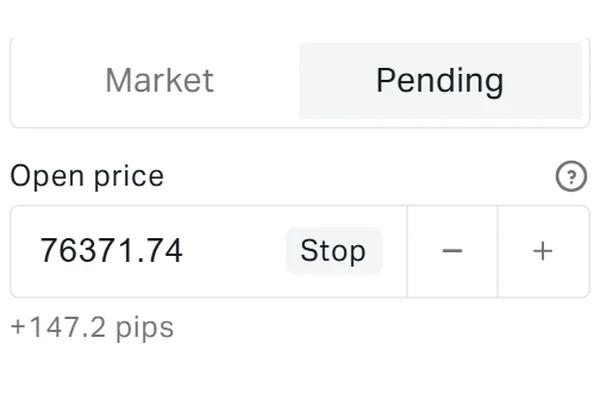 How to sell Bitcoin in Nigeria: the steps and the checksSelling bitcoin in Nigeria is mostly a matter of process. You pick a venue you trust, complete its checks, compare…
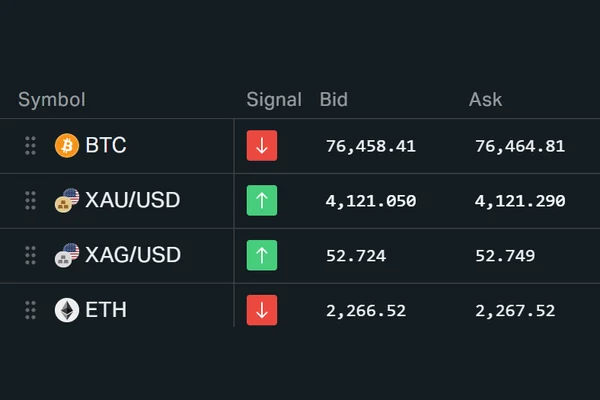 Bitcoin wallets explained: custody, keys and backupsA bitcoin wallet does not hold coins the way a purse holds cash. It holds the keys that let you move coins…
Read next: How to buy Bitcoin in Nigeria: the steps and the checks · Coins and charts · Prices