Bitcoin to dollar: how the BTC/USD rate works
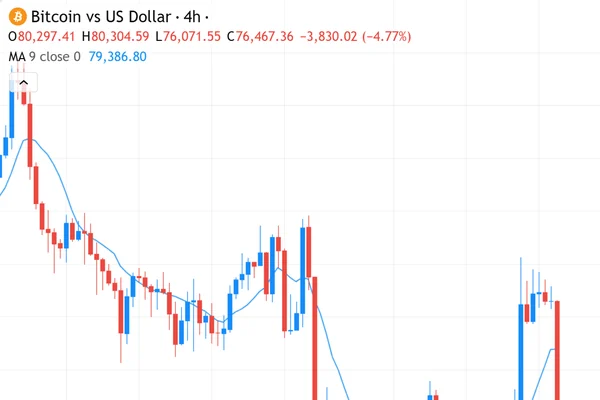
The BTC/USD rate tells you how many US dollars one bitcoin is quoted at, and that figure moves around the clock as buyers and sellers trade. The chart on this page shows the quote from its feed, which can run behind the market by a short delay. This site prints no rate of its own and has no converter, so treat the chart as a window on the market rather than a price you can lock in.
Bitcoin: chart
Chart by the TradingView widget; the data may be delayed, see its page.
The price is drawn here by the TradingView widgetThe price widget did not load
If nothing appears, the exchange shows the same quote on its own page.
Quote at the exchangeBTCUSD on bitstamp.netOpen the widget source on TradingView- Currency
- USD
- Price on this page
- TradingView widget, delayed
What the BTC/USD pair means
A currency pair quotes one asset against another, and the order matters. In BTC/USD, bitcoin is the item being priced while the US dollar is the money doing the pricing. The quote answers a single question: how many dollars would one bitcoin fetch at that moment.
Read the same pair the other way and you get a different question: how much bitcoin does one dollar buy? That figure is the inverse of the first. If a dollar buys a small slice of a coin, then a whole coin is worth many dollars, and the two numbers move in opposite directions by definition. Neither view is more correct; they simply describe the same market from opposite ends.
This page shows the first view, the dollar value of one bitcoin, because it is the usual way to quote a price. A reader thinking in naira needs a second figure, the dollar rate against the naira, since the dollar quote is not a naira price. The chart is a market snapshot, not an offer, and its feed can lag the live market slightly.
- The first name in the pair is the base: the thing being priced.
- The second name is the quote currency: the money used to express the price.
- Swapping the order inverts the number.
Converting by hand, in words
To value a holding in dollars, multiply the amount of bitcoin you hold by the quoted rate. Half a coin is half the rate; a tenth of a coin is a tenth of it. The arithmetic is plain multiplication, so the only input you need is a rate you can point to.
Going the other way means dividing instead. If you have a dollar figure in mind and want to know how much bitcoin it buys, divide that figure by the rate. A larger rate buys less coin for the same money, which is the same relationship seen from the other side.
Take the rate from the chart on this page at the moment you need it, and write the time beside it so you can redo the sum later.
Work in words first when the sums are simple, then reach for a calculator once fractions appear. If you convert to naira as well, use the dollar rate against the naira for that second step rather than mixing the two rates together.
Fractions and rounding
Bitcoin is divisible into very small units, so most people who hold it deal in fractions of a coin rather than whole ones. That is why a transaction or a holding often appears as a long string of decimals. The length of that string does not mean the price is known to that precision; it is simply how the platform formats the figure.
Round only at the end of your working. If you trim the rate before multiplying, the small gap you introduce grows with the size of the amount you are valuing. A slip that looks trivial on a tiny holding can shift the answer by a noticeable margin on a larger one.
Small dollar amounts buy only a small slice of a coin, so expect a fraction with several zeros after the decimal point. Seeing that does not mean you made an error. It reflects the gap between the price of a whole coin and the money you are spending.
Keep the full quoted figure through the sum, then round the final result to something you can read. Note whether the chart you used was showing a delayed feed, since an older quote and a fresh one will not round to the same number.
Why your result differs from another site's
Two people can work correctly from the same pair and still land on different answers. The gap usually comes from timing, venue or rounding rather than from a mistake in the arithmetic. Knowing which one is at play tells you whether to redo the sum or simply accept the difference.
A quote moves every moment, so a figure captured a few minutes apart is a different figure. Each marketplace also keeps its own feed, and the price on one can sit slightly above or below another at the same instant. Add the delay in the chart on this page and you have three separate reasons for a mismatch before anyone has touched a calculator.
Spread explains another part of it. Buyers and sellers post different prices, so the rate you see depends on which side of the market the source is quoting. Rounding adds a final sliver: a site that trims early and one that trims late will not print the same number.
Small differences are normal. If the gap is wide enough to change your decision, stop and re-check the time, the source and your working before relying on the figure. A screenshot of a rate proves only what one screen showed at one moment, so treat it as a record, not a live quote.
Quick checks before you rely on a conversion
A conversion is only as good as the inputs you feed it. Before you rely on a figure, run through a short set of checks. None of them takes long, and each one catches a different kind of mistake.
Confirm which pair you are on: the dollar value of one bitcoin is not the same as the naira value, and the naira page carries a second price for the dollar itself. Check the direction too, since one path multiplies and the other divides.
For a real trade, add the spread and any fees to your working; the headline rate is not the amount that lands. The figure that counts is the one your platform quotes at the moment of the trade, not a chart you saw earlier. The dollar price page is a reference, not a dealing screen.
Bitcoin: basics
- Market
- BITSTAMP · BTCTOUSD
- Founded
- 2009Wikidata
Coin profile from Wikipedia and Wikidata (fetched 05.11.2026); it may lag behind recent changes.
More guides
 What is Bitcoin and how does it workBitcoin is a digital currency that exists only as records on a network of computers, and no central bank or…
 How to buy Bitcoin in Nigeria: the steps and the checksBuying bitcoin in Nigeria starts with deciding where the coins will come from, because the route you pick shapes…
 How to sell Bitcoin in Nigeria: the steps and the checksSelling bitcoin in Nigeria is mostly a matter of process. You pick a venue you trust, complete its checks, compare…
Read next: Prices · Bitcoin to naira: how the BTC/NGN rate works · What is Bitcoin and how does it work