Coins and charts
Coins with their own page here: a live price chart, the launch year and the basic facts about each project, plus links to the price pages and guides.
- Bitcoin (BTC): chart and basicsThe first decentralized cryptocurrency.
- Bitcoin Cash (BCH): chart and basicsA fork of bitcoin that runs as a separate coin.
- Ethereum (ETH): chart and basicsA decentralized blockchain with smart contract functionality; ether is its native coin.
- Tether (USDT): chart and basicsA stablecoin that aims to keep a stable value relative to the US dollar.
- XRP (XRP): chart and basicsThe native cryptocurrency of the XRP Ledger.
- Solana (SOL): chart and basicsThe native coin of the Solana blockchain platform.
- Tron (TRX): chart and basicsTronix, the native coin of the Tron blockchain.
How a coin page is built
Each coin page on this site is assembled from three parts: a chart, a short profile, and a facts block. The profile and the facts block are built from Wikipedia and Wikidata, and the page shows the date on which that information was fetched. Because of that fetch date, the facts can lag behind recent changes to a coin, so treat them as a snapshot rather than a live record.
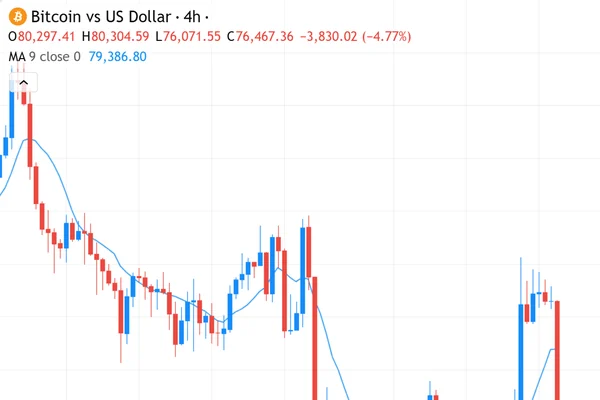
The chart is a TradingView widget embedded in the page, and this site prints no price of its own. Any figure you see in that chart comes from the widget, and its data may be delayed, so confirm anything important against a source you trust before acting on it. Our page on how we work sets out this approach in more detail.
The coins listed in the hub are simply the ones that currently have a page; more pages are added over time as coverage grows. A missing coin does not mean it is unimportant, only that no page exists yet. If a profile looks thin, open the linked Wikipedia entry and read the cited sources yourself.
- The profile gives background: what the coin is and where it came from.
- The facts block lists stable details such as supply cap and block interval.
- The chart shows price movement from the widget, possibly delayed.
What a coin profile can and cannot tell you
A profile records what a project says about itself: the idea behind the coin, the year it started, and the basic design choices such as how new units are created. For Bitcoin, the profile notes that the design was set out in a paper credited to Satoshi Nakamoto, with the network going live in 2009. That kind of background helps you place a coin in context, but it is description, not endorsement.
What a profile cannot do is tell you whether the coin will hold its value, whether any particular platform will list it, or whether holding it is safe for you. A coin can have a clear design and a long record and still lose most of its worth. Age is not a shield against loss; young projects can fade away entirely, leaving holders with something nobody wants to trade.
Being listed on this hub is not a recommendation. The list reflects which pages exist, nothing more, and a page can be accurate about a coin's history while saying nothing good about its prospects.
Use the profile to understand what you are looking at, then treat the price question separately. The chart on each coin page comes from a TradingView widget and its figures may arrive late, so it shows movement rather than a settled value.
Bitcoin, its forks and other kinds of coin
Bitcoin was the first decentralised cryptocurrency: a design set out in a paper credited to Satoshi Nakamoto in 2008, with the network running from 2009. Every other coin arrived later and either copied that design, altered it, or split away from it. Coins that are not Bitcoin are usually grouped under the loose label altcoins.
A fork starts from the same transaction record as the original chain and then follows its own rules. Bitcoin Cash is the clearest example: it launched in 2017 as a spin-off of Bitcoin, so it shares the older coin's history up to the split but trades and behaves as a separate coin afterwards. Both use proof of work, both cap supply at twenty-one million coins, and both add a block about every ten minutes, yet they are not interchangeable.
Some coins are platforms rather than simple money. On these chains the native coin pays for programs to run, so demand is tied to use of the network rather than to payments alone. The profile of ether explains one such platform. A stablecoin works differently again: its issuer aims to keep its value level with the US dollar. That is an aim, not a guarantee, and it depends on the issuer.
Names repeat across the market, and a ticker code can be reused by an unrelated project. Before you send money to any platform or seller, confirm the full name and code against the Bitcoin page or the project's own documentation. Sending to the wrong chain can mean the funds are gone.
Reading a coin chart
Every coin page carries its own chart, and that chart shows the market for that coin alone. Most coins trade in far smaller volumes than Bitcoin, so orders of a modest size can shift the quoted price further than they would on a deeper market. Expect sharper swings on a thin coin, in both directions, and read them as a sign of shallow trading rather than as news.
Change the timeframe before you draw any conclusion. A line that looks calm on a monthly view can be jagged across a day, and a steep drop on an hourly view may barely register on a weekly one. The widget lets you switch between these views, so look at more than one.
A figure quoted in US dollars is not a naira price. To see Bitcoin in local currency you need a second chart showing the dollar against the naira, and the bitcoin to naira page carries both side by side. The Central Bank of Nigeria publishes the official dollar rate, which that page links to, so you can see the gap between official and market rates yourself.
Two coin charts cannot be compared by the look of the line. Each chart sets its own vertical scale, so a small coin's modest move can fill the frame while a larger move on another chart looks tame.
Before you touch any coin
The first check is identity. Confirm the coin's full name and ticker code on the platform you are using, then match them against the project's own documentation, because similar names and reused codes are common. A coin's code alone is not proof of what you are buying.
When you reach a deposit page, read the network label beside the address. Sending a coin on the wrong network can lose the funds, and support may not be able to recover them. Set up a wallet for the coin you intend to hold, one that lists support for that specific coin and network before you send anything to it.
Start with a small test amount, confirm it arrives where you expect, then send the rest. Save the receiving address carefully and check the first and last characters against what the platform shows. Read the platform's terms on withdrawals and account access, since these govern what happens if something goes wrong.
Treat unsolicited messages with suspicion. Anyone promising returns, pressing you to act quickly, or sending a link to claim "free bitcoin" is very likely running a scam; ignore the message and do not open the link.
More guides
 What is Bitcoin and how does it workBitcoin is a digital currency that exists only as records on a network of computers, and no central bank or…
 How to buy Bitcoin in Nigeria: the steps and the checksBuying bitcoin in Nigeria starts with deciding where the coins will come from, because the route you pick shapes…
 How to sell Bitcoin in Nigeria: the steps and the checksSelling bitcoin in Nigeria is mostly a matter of process. You pick a venue you trust, complete its checks, compare…
Read next: What is Bitcoin and how does it work · Prices