Prices
These pages present the market price of Bitcoin in a few common quote currencies, with a chart and a plain explanation of what you are looking at. Every figure comes from a charting widget supplied by TradingView and may be delayed, so treat it as a guide rather than a live quote. This site prints no price of its own.
Which page answers which question
The list below points you to the page that matches your question, so you do not have to hunt through charts that answer something else. Each entry names the question the page settles and the kind of figure it shows. Start with the one closest to what you typed into the search box.
- Bitcoin price in USD: what is the Bitcoin price in US dollars right now, and how do you read the chart that shows it moving?
- Bitcoin to dollar: how does a BTC/USD rate work, and how do you convert a holding by hand?
- Bitcoin to naira: how is the naira figure built from two charts, one for Bitcoin in US dollars and one for the US dollar against the naira, with a link to the official rate from the Central Bank of Nigeria?
- Ethereum to naira: the same two-chart method applied to another coin, so you can see how the naira figure is assembled.
- Tether to naira: the same method again for a stablecoin, where the naira quote is driven mainly by the dollar side rather than by the coin itself.
New price pages will be added as the site grows, each following the same layout and the same sourcing rule, so a page you cannot find today may appear later. Nothing here promises a date or a particular coin.
How to read any chart on these pages
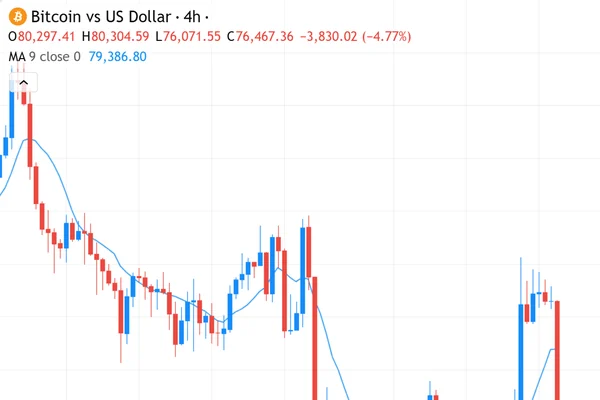
Every chart on these pages puts price on the vertical axis and time along the bottom, so a rising line means the quote went up over that period and a falling line means it went down. Buttons above the chart let you switch the window: an hour, a day, a week, a month, a year. A line chart joins closing prices into one continuous stroke, while candles show the open, close, high and low of each period as a separate shape.
Move your cursor across the plot, or touch it on a phone, and a small box appears with the figure at that moment. On a narrow screen, turn the handset sideways if the labels crowd together. Candles suit shorter windows where you want to see each period’s range; the plain line is easier when you only care about the general direction.
A jump that looks dramatic on a one-hour view can shrink to a blip once you stretch the window to a month, because the same naira or dollar change sits inside a much larger move. Compare two windows before you draw any meaning from a spike. The widget can also lag the market, and where it fails to load, the TradingView link printed beneath it opens the same chart.
Quote words you will meet
A short glossary makes the figures on these pages easier to follow, because the same few words appear on every chart and in every headline. Each term below is explained in the way it is used here.
- Pair: two currencies shown against each other, such as Bitcoin priced in US dollars.
- Base currency: the thing being priced, written first in the pair.
- Quote currency: the money the price is expressed in, written second.
- Rate: how much of the quote currency one unit of the base currency is worth.
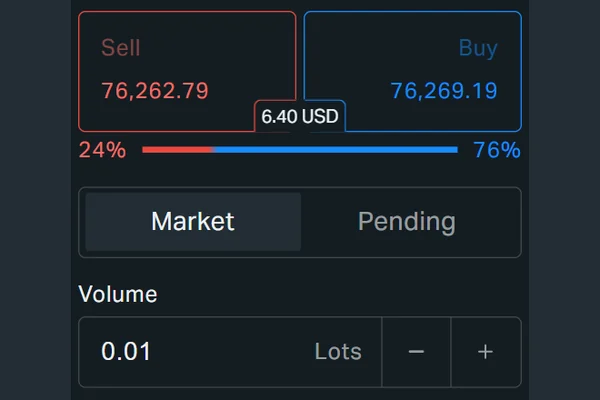
- Buy price: what a buyer is currently willing to pay, also called the bid.
- Sell price: what a seller is currently asking, also called the ask.
- Spread: the gap between the buy and sell prices.
- Last trade: the price at which the most recent trade was agreed.
- Depth: how much buying and selling interest sits at nearby prices.
- Volume: how much trading has taken place over the period shown.
- Timeframe: the window the chart covers, from an hour to a year.
- Delayed data: figures that reach the chart a little after the market moves.
Read the pair first, then the rate, and remember that the buy and sell prices sit on opposite sides of any trade. A wide spread means you pay more to enter and receive less to exit.
Why quotes differ between places
Two screens showing Bitcoin at the same moment can still carry different figures, and that is normal. Each marketplace pools its own buyers and sellers, so the last trade agreed on one venue reflects only the people trading there. Add the spread, and the fee charged on the way in or out, and the gap widens further.
Peer-to-peer marketplaces work differently again. There, each seller sets a naira price for the amount on offer, and buyers pick from the listings, so the rate you see belongs to one seller rather than to a central order book.
For an actual trade, the price that counts is the one on the platform you are using, quoted at the moment you confirm. A chart is for orientation only, and the figure in the TradingView panel can trail the market, so it may not match the rate on your screen.
If a marketplace quote sits far from the chart, stop and check the pair, the timeframe and any fees before you act. When you are ready to trade, see how to buy bitcoin in Nigeria.
What these pages do not do
The pages carry no converter, so you cannot type an amount of Bitcoin or naira into a box and get a figure back. No alerts are sent when a rate moves, and no forecast or signal is issued at any point. Nothing here tells you to buy or sell.
Every price you see is drawn by the chart widget from its own feed, and the display can trail the market. Staff do not type quotes by hand, so a figure cannot be edited to flatter a coin. When a source changes its data, the page rebuilds from that source rather than from an old copy.
For how the site gathers and presents its figures, see the method page. For the risks that come with trading, including leverage and CFDs, read the responsible trading page before you act on any figure shown.
More guides
 What is Bitcoin and how does it workBitcoin is a digital currency that exists only as records on a network of computers, and no central bank or…
 How to buy Bitcoin in Nigeria: the steps and the checksBuying bitcoin in Nigeria starts with deciding where the coins will come from, because the route you pick shapes…
 How to sell Bitcoin in Nigeria: the steps and the checksSelling bitcoin in Nigeria is mostly a matter of process. You pick a venue you trust, complete its checks, compare…
Read next: What is Bitcoin and how does it work · Coins and charts · Bitcoin (BTC): chart and basics