ETHEthereum
Ethereum is a decentralized blockchain with smart contract functionality, and ether is the native cryptocurrency of that platform. This page gives a short profile of Ethereum, drawn from open reference sources, alongside a chart of the ether price in US dollars. The site prints no price of its own: every figure comes from an embedded TradingView chart widget, and its data may arrive with a delay.
ETH price chart
Chart by the TradingView widget; the data may be delayed, see its page.
The price is drawn here by the TradingView widgetThe price widget did not load
If nothing appears, the exchange shows the same quote on its own page.
Quote at the exchangeETHUSD on bitstamp.netOpen the widget source on TradingView- Currency
- USD
- Price on this page
- TradingView widget, delayed
The price comes from the TradingView widget and may lag the market; it is not a price from this site.
Ethereum and ether: two names for two things
People often say Ethereum and ether as if they mean the same thing. They do not. Ethereum is the network, a shared computer that many independent machines run together; ether is the coin that network uses, and its ticker is ETH.
The feature that sets Ethereum apart is the smart contract: a small program stored on the chain that runs automatically when its conditions are met. Because the code sits on the chain, anyone can inspect it, and the same rules apply to everyone who interacts with it. The software is open source, so its code can be read, copied and checked by anyone who cares to look.
There is no single owner to call when something goes wrong. The project dates to 2015, and the network is not run by a single company. If you want the background on the older coin, our explainer on bitcoin covers it separately.
The mix-up is easy to understand. Ether is what you buy, send and hold, so it takes the name people see most often, while Ethereum is the machinery underneath. In practice, a wallet address holds ether, and that ether is what pays for activity on the Ethereum network.
How it differs in purpose from bitcoin
Bitcoin was built to do one job well: record who sent how much of a single coin to whom. Its design keeps that ledger simple and hard to alter, as described in the BTC coin profile. Ethereum keeps the same idea of a shared ledger but adds a layer on top, so programs and other tokens can run on the same chain.
A bitcoin transaction moves bitcoin and little else. On Ethereum, a transfer can trigger a smart contract that swaps tokens, records ownership or runs some other rule written into code. That extra capability is the main design difference, and it is why the two chains are not interchangeable.
Each network has its own supply rules and its own separate market price. Holding ether gives you no claim on bitcoin, and the reverse is also true. The two coins are tracked and traded apart from each other.
This page compares the two by purpose only and does not rank either as better. A CFD follows the price without owning the coin, uses leverage and can lose money quickly, so it suits few people.
Reading the ETH chart on this page
The chart on this page plots ether against the US dollar, not the naira. It is an embedded TradingView widget, so the candles are drawn by a third party and can trail the live market by a short delay. Treat the last candle as indicative rather than exact.
Start with the timeframe buttons along the top of the chart. A short setting such as one hour shows fine detail and a lot of noise; a daily or weekly setting compresses the same history into a calmer picture. Pick a second timeframe and compare the two before you read anything into a single move.
Hovering over a candle opens a small box with its open, high, low and close. That is useful for checking what actually happened on a given day instead of relying on memory. The page itself prints no figure of its own; everything you see comes from the widget.
For a naira view, open the ether price in naira, which pairs the dollar chart with a dollar-to-naira chart so you can see both legs of the conversion. A CFD on ether tracks the price without giving you any coin, uses leverage and can lose money quickly.
Owning ether and the network fee
To hold ether you need a wallet built for Ethereum; a bitcoin-only wallet will not do (the wallets guide explains how wallets work in general). The wallet stores the keys that prove the ether is yours, and it generates the receiving address you share with whoever is sending. Keep the recovery phrase offline and out of screenshots; anyone who reads it controls the funds.
Ethereum addresses are not bitcoin addresses. They use a different format, and sending to the wrong kind of address can leave the coins stranded. Before you send, confirm the address came from the recipient's Ethereum wallet and that the first and last few characters match what they gave you. A small test transfer first is a sensible habit.
Moving ether costs a network fee, paid in ether itself, and that fee rises and falls with how busy the chain is. You cannot pay it in naira from your banking app; the wallet deducts it from your ether balance, so keep a little spare. If the fee looks high, waiting for a quieter moment is an option.
Tokens that run on Ethereum are separate assets from ether, even when they sit in the same wallet. Holding one gives you no claim on the other, and each has its own contract address.
Following the price without owning ether
Some readers want exposure to the ether price without setting up a wallet or holding any coin. That is what a contract for difference does: it follows the price of the underlying asset, and the position is settled in cash rather than in ether. Nothing is delivered, so there is no address to create and no recovery phrase to guard.
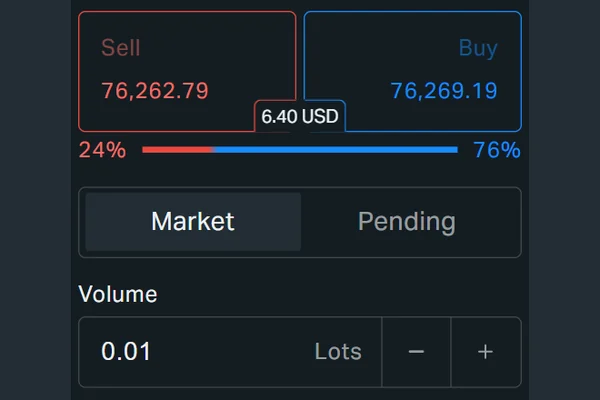
The sponsored block on this page leads to a broker offering crypto CFDs, including on bitcoin and ether. Read the guide to crypto CFDs before you go further; it sets out how these contracts work and where the risks sit. A demo terminal screenshot on this page shows ether against the US dollar as one of the listed markets.
Leverage is the part that catches people out. It lets you open a position larger than the money you put down, which magnifies losses as well as gains, and a short move against you can wipe out the deposit quickly. CFDs are not suitable for everyone, and nothing here is advice to trade.
Ethereum: basics
- Market
- Crypto market · ETH
- Founded
- 2015Wikidata
Coin profile from Wikipedia and Wikidata (fetched 07.11.2026); it may lag behind recent changes.
More guides
 What is Bitcoin and how does it workBitcoin is a digital currency that exists only as records on a network of computers, and no central bank or…
 How to buy Bitcoin in Nigeria: the steps and the checksBuying bitcoin in Nigeria starts with deciding where the coins will come from, because the route you pick shapes…
 How to sell Bitcoin in Nigeria: the steps and the checksSelling bitcoin in Nigeria is mostly a matter of process. You pick a venue you trust, complete its checks, compare…
Read next: Tether (USDT): chart and basics · Coins and charts · Prices