Trading Bitcoin through CFDs: what it means and what it risks
A contract for difference lets you follow the price of bitcoin without owning any coin. This guide explains how that works, how it differs from buying coins through an exchange or a marketplace, and the risks, in particular leverage and close-outs. It is information, not advice, and CFDs are not suitable for everyone.
What a contract for difference is
A contract for difference is an agreement with a broker to settle the difference between the price when you open a position and the price when you close it. No bitcoin is bought, held or delivered at any point. The position exists only as a record on the broker's platform, and your result is credited to or debited from your account when you close.
Because nothing changes hands except the price difference, you can take a position on a rise or on a fall. If you expect the price to go up, you open a long position; if you expect it to go down, you open a short one. The profit or loss is measured against the price at which you opened, not against any coin you own.
This is different from buying bitcoin through a peer-to-peer marketplace, where coins move to a wallet you control. With a CFD, there is no wallet and no private key. Your only record is the broker's platform, so the terms of that platform matter as much as the price itself.
Before opening anything, check the contract details on the platform: the opening and closing price quoted, the size of the position, and how the result is calculated. A demo account lets you watch that arithmetic with no money at stake.
Owning bitcoin versus following its price
Owning bitcoin means holding it in a bitcoin wallet that you control. Coins sit at a public address, and the keys that let you move them stay with you or with whoever holds the wallet. You can send them out at any hour, to anyone, and the network charges a fee for confirming the transfer.
A contract for difference gives you none of that. There is no address, no key and no balance of coins, because nothing is ever delivered. What you hold is a position on the broker's platform, and the only way to realise a result is to close that position.
Protecting keys is the main duty of ownership. Lose them and the coins stay where they are, unmoved and unusable by you. With a contract, there are no keys to lose, but the counterparty is the broker: your position depends on that firm meeting its side of the agreement, and on its platform staying open to you.
Leverage is a feature of the contract side. A purchase of actual coins through a peer-to-peer marketplace or an exchange settles in full, and the coins are yours once they reach your wallet. A leveraged position can be closed out by the broker when the market moves against it, which ends the trade whether you wanted it ended or not.
Leverage cuts both ways
Leverage means you put up only a fraction of the position's value as margin, while the broker covers the rest. That fraction is your stake, and it is the money actually at risk when you open. The rest is borrowed exposure, so your result is measured against the full size of the position, not against the small amount you deposited.
The effect runs in both directions at the same rate. A move in your favour is multiplied, and a move against you is multiplied by the same factor. There is no setting that keeps the gains and softens the losses; the two are tied together by the size of the position.
This is why a modest change in the bitcoin price can take a large bite out of an account. If the position is many times your margin, a small adverse move can consume most of what you deposited, even though the price itself barely shifted. Traders often underestimate this because they watch the price and not the position size.
Stops are not a fixed shield in a fast market. When the price jumps, an order to close at a chosen level may be filled at a worse one, so the loss can exceed what you planned. That gap between the level you set and the level you get is a real cost of trading around news or thin hours.
Treat the margin as money you can lose in full, because that is the central danger of the product.
Margin calls and close-outs
When a position moves against you, the loss is taken from the margin you deposited. If that margin falls below the level the broker requires, the account is in a margin call. At that point the broker may ask you to add funds, or it may simply close the position itself.
Close-outs can happen without warning. Many platforms act automatically once the margin threshold is reached, and in a fast market the closure may come before any message reaches you. Read the platform's terms on margin before you trade, so you know the level at which your positions can be shut.
Once a position is closed, the loss is locked in. The money is gone from your account, and waiting does not bring it back. This is the key difference from holding coins: a coin holder can sit through a fall and still hold the same coins, but a closed contract has nothing left to recover.
Some brokers offer protection against a negative balance, so that you cannot owe more than your account holds. That protection is a feature of a particular contract, not a rule of the market, so check whether it applies before you rely on it.
Costs that build up
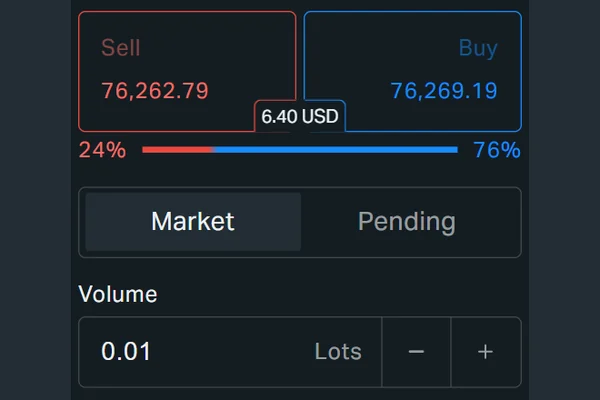
Every position carries a spread, which is the gap between the price at which you can open and the price at which you can close. You begin slightly behind, because the market must move by at least that gap before the trade shows any gain. The size of the spread varies with the contract and with how busy the market is.
Hold a position past the daily rollover and a financing charge usually applies. This is the cost of keeping the borrowed exposure open overnight, and it accrues for as long as the position stays open. A trade held for days or weeks can therefore cost far more than the spread alone suggested.
If an account is held in one currency and the contract is priced in another, converting funds adds a cost of its own. Check the conversion rate the broker applies, since it may differ from the rate you see quoted elsewhere.
Small charges repeated often become large. A trader who opens and closes many positions in a day pays the spread each time, and those amounts accumulate faster than most people expect.
Read the broker's cost page before trading and add up the spread, the financing and any conversion charge. Compare that total with the move you expect, because costs are certain while the outcome is not.
A market that never closes
Bitcoin trades around the clock, every day of the week. The market does not pause when the banks close or when you sleep, so a position opened on a quiet evening can be tested before morning. That is a different rhythm from markets that close in the evening and at weekends.
Weekends and the small hours can bring sudden moves. Volume thins out, so a single large order can push the price further than it would in a busy session. A gap can open between the last price you saw and the next one you can trade at.
You may be unable to react in time. A move that happens while you are asleep or offline can trigger a close-out before you have seen it, and by the time you check the app the position is gone.
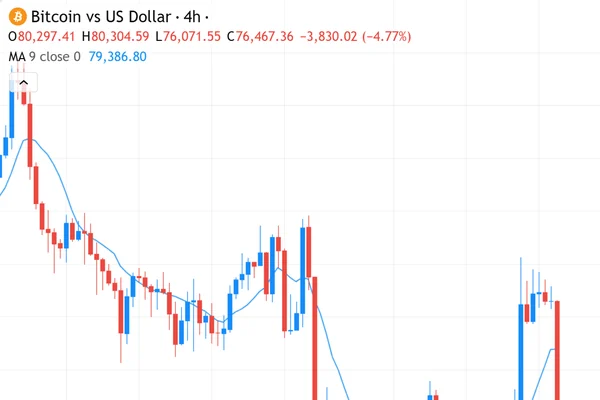
The bitcoin price in dollars shown on this site comes from a charting widget, and its feed can lag the live market. Treat the chart as a guide, not a tick-by-tick record, and confirm the current quote on the platform where you trade.
Set your exit levels before you open a position, not after the price has moved. Trading while tired, or opening a bigger trade to recover a loss, tends to produce decisions you would not make with a clear head.
Practice before using money
A demo account lets you use the trading platform with simulated money, so you can place orders without depositing naira. Many brokers offer one alongside the live account, and it mirrors the layout of the real terminal. Use it to learn where the order ticket sits, how the position size is set and how margin is displayed.
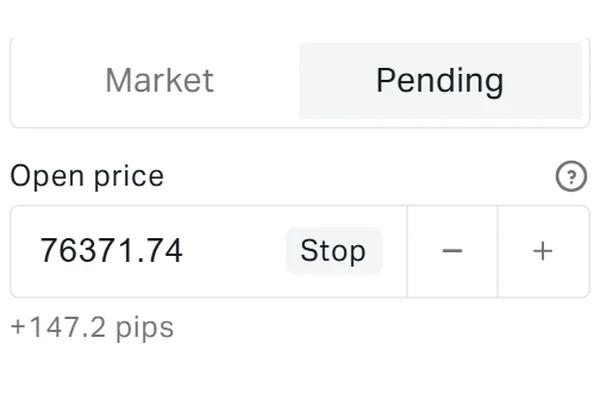
Work through the order types first. A market order fills at the current price, a limit order waits for a price you choose, and a stop order triggers once a level is reached. Placing each one in the demo shows you how the platform behaves before real money is involved.
Watch what happens to the margin figure as a position moves. Open a trade large enough to matter, then follow the balance as the price drifts against you. Seeing a close-out happen in the demo, with nothing at stake, teaches more than reading about it.
The demo is a learning tool, not a promise of results. Simulated trades fill instantly and never slip, so the pressure of a live loss and the worse fills of a fast market are missing. Treat what you learn as familiarity with the platform, not as evidence that live trading will go the same way.
Who this is not for, and what the sponsored link is
A contract for difference is a complex product, and trading it is risky. It may not suit everyone who reads this page, and no one can decide that for you. If you cannot explain leverage and a close-out to a friend in plain words, wait until you can.
Money you need for rent, school fees, transport or family support does not belong in a trading account. Use only funds whose loss would leave your daily life unchanged. Putting money into a trading account is easy; losses cannot be undone.
Some readers should stay away entirely: those who cannot afford a loss, those who have not tried a demo, and those who feel pressure to recover money quickly. The responsible trading page sets out the habits that keep risk in view.
A sponsored block on this site leads to a broker offering crypto CFDs. The site earns from that placement, which is why the block is marked as sponsored. The broker is not named in this text, and the arrangement does not change what the product is.
Nothing here is advice, and no result is promised. A sponsored link is an introduction to a platform, not a recommendation to trade. The choice, and the risk, remain yours.
More guides
 What is Bitcoin and how does it workBitcoin is a digital currency that exists only as records on a network of computers, and no central bank or…
 How to buy Bitcoin in Nigeria: the steps and the checksBuying bitcoin in Nigeria starts with deciding where the coins will come from, because the route you pick shapes…
 How to sell Bitcoin in Nigeria: the steps and the checksSelling bitcoin in Nigeria is mostly a matter of process. You pick a venue you trust, complete its checks, compare…
Read next: What is Bitcoin and how does it work · Coins and charts · Prices